Png to JPG Converter
Convert PNG images into compact JPG format for smaller files. No signup. JPG is lossy and has no transparency, so keep your PNG if you need those.
Share on Social Media:
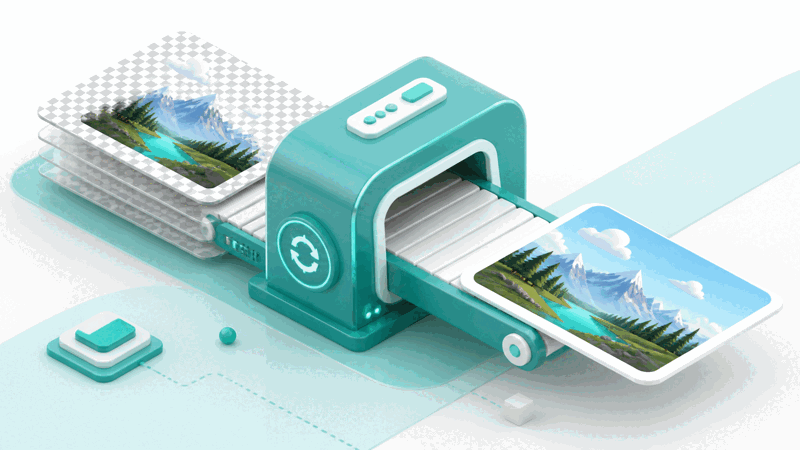
This PNG to JPG converter turns PNG images into compact JPG format, directly in your browser. Provide a PNG and get a JPG. No account, no install, so you can convert PNG images into smaller JPG files on any device in seconds.
How to Convert PNG to JPG Step by Step
- Provide your PNG. Upload the PNG image you want to convert into JPG format.
- Convert to JPG. The tool converts the PNG into a JPG image, changing the format to the compact JPG.
- Get the JPG image. Receive the JPG image, your picture now in JPG format, typically smaller than the PNG.
- Check the image. Review the JPG to confirm it converted correctly and appears as expected.
- Use the JPG. Use the JPG wherever you need a compact image, benefiting from JPG's smaller file size.
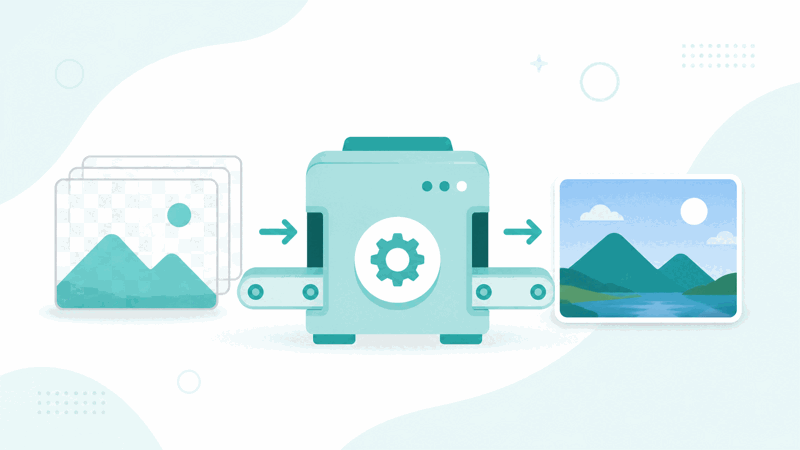
What PNG and JPG Are
PNG and JPG are both common image formats with different characteristics. PNG uses no lossy compression, preserving quality, and supports transparency, making it good for graphics and images needing transparency, but files are larger. JPG uses lossy compression, keeping files small, and does not support transparency, making it good for photos where small size matters. Converting PNG to JPG changes a PNG into the compact JPG format.
The reason to convert PNG to JPG is usually to get a smaller file. PNG files can be large, and if you do not need transparency or lossless quality, converting to JPG produces a more compact file, which is easier to share, upload, or store where file size matters. So converting a PNG to JPG trades PNG's larger, lossless, transparency supporting format for JPG's smaller, compact one.
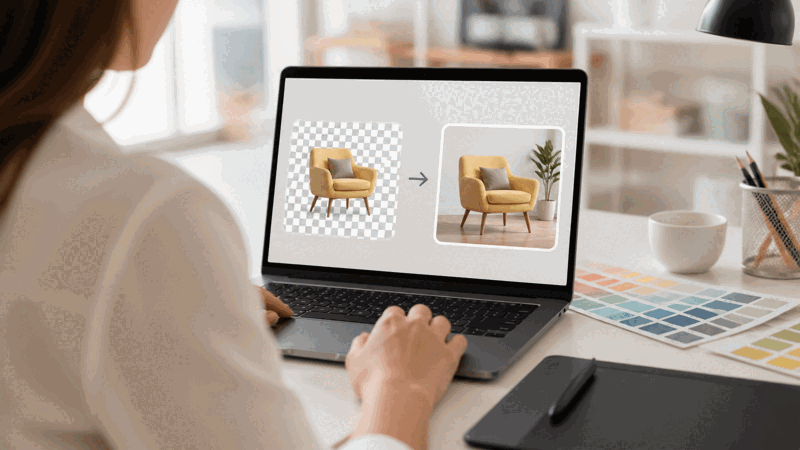
PNG and JPG differ in compression, transparency, and size. PNG is lossless and supports transparency but is larger. JPG is compact via lossy compression but has no transparency and applies some quality loss. So converting PNG to JPG gives a smaller file but loses transparency, which becomes a solid background, and applies lossy compression. So it suits when you want a smaller file and do not need transparency or lossless quality.
PNG to JPG conversion is used when someone wants a smaller image file and does not need PNG's transparency or lossless quality: reducing file size for sharing, uploading, or storage, particularly for images like photos where JPG suits well. Because JPG is compact, converting a PNG to JPG is a practical way to get a smaller file, as long as you accept the loss of transparency and the lossy compression.
PNG Versus JPG
| Aspect | PNG | JPG |
|---|---|---|
| Compression | Lossless | Lossy |
| Transparency | Supported | Not supported |
| File size | Larger | Smaller |
| Good for | Graphics, transparency | Photos, small size |
Who Converts PNG to JPG
Pro Tips for PNG to JPG
Common PNG to JPG Mistakes to Avoid
Related Tools You May Need Next
For other formats, our JPG to PNG tool converts the other way, the PNG to WebP tool offers another compact format, and the JPG to PDF tool makes a PDF.
Frequently Asked Questions
How do I convert PNG to JPG?
Provide the PNG image you want to convert, and the tool converts the PNG into a JPG image, changing the format to the compact JPG. Receive the JPG image, your picture now in JPG format, typically smaller than the PNG, review it to confirm it converted correctly and appears as expected, then use the JPG wherever you need a compact image. This gives you the image in JPG, benefiting from JPG's smaller file size, useful when you want a more compact file and do not need transparency or lossless quality. Note that JPG does not support transparency, so any transparency becomes a solid background, and JPG applies lossy compression, so there is some quality loss for the smaller size. So convert to JPG when a smaller file is wanted and transparency and lossless quality are not needed, keeping your PNG if they are.
What are PNG and JPG?
PNG and JPG are both common image formats with different characteristics. PNG uses no lossy compression, preserving quality without discarding detail, and supports transparency, making it good for graphics, logos, and images needing transparency, though its files are larger. JPG uses lossy compression, which keeps files small by discarding some detail, and does not support transparency, making it good for photos where compact file size matters. So PNG is lossless and supports transparency but is larger, while JPG is compact but lossy with no transparency. Converting PNG to JPG changes a PNG into the JPG format, giving a smaller file at the cost of transparency, which becomes a solid background, and applying lossy compression. So the two formats suit different needs, and converting PNG to JPG is useful when you want the smaller, compact JPG and do not need PNG's transparency or lossless quality, such as for photos or reducing file size for sharing.
What is the difference between PNG and JPG?
PNG and JPG differ mainly in compression, transparency, and file size. PNG uses lossless compression, preserving all detail without loss, and supports transparency, which suits graphics, logos, images with transparent areas, or where quality matters, though PNG files are larger. JPG uses lossy compression, discarding some detail to achieve small file sizes, and does not support transparency, which suits photos where compact size is valued. So PNG offers full quality and transparency at the cost of larger files, while JPG offers small files at the cost of some quality and no transparency. This means you choose PNG for graphics, transparency, or quality, and JPG for compact photos or smaller files. Converting PNG to JPG gives a smaller file but loses transparency, which becomes a solid background, and applies lossy compression. So the key differences are PNG's lossless, transparency supporting, larger format versus JPG's lossy, compact format with no transparency, each suited to different uses and priorities between quality and file size.
Will I lose transparency converting to JPG?
Yes, you will lose transparency converting a PNG to JPG, because JPG does not support transparency. If your PNG has transparent areas, converting to JPG replaces the transparency with a solid background, since JPG cannot represent transparent regions. So transparency is not preserved in the conversion. This is an important consideration: if your image relies on transparency, such as a logo or graphic meant to sit on varied backgrounds, converting to JPG would lose that, and the result would have a solid background instead. So you should convert to JPG only when you do not need transparency, and keep your PNG if transparency matters for your image. For images without transparency, like most photos, this is not an issue, and JPG gives a compact file. So be aware that converting PNG to JPG loses any transparency, making it suitable only when transparency is not needed, and keep the PNG for images where transparent areas are important to preserve.
Why convert PNG to JPG?
You convert PNG to JPG usually to get a smaller, more compact file. PNG files can be large, and if you do not need transparency or lossless quality, converting to JPG produces a smaller file, which is easier to share, upload, or store where file size matters. JPG's lossy compression makes it compact, well suited to photos and situations where a smaller file is preferable. So converting a PNG to JPG trades PNG's larger, lossless, transparency supporting format for JPG's smaller, compact one. This is useful when you want to reduce file size for sharing or uploads, when you have a photo saved as PNG that would be more compact as JPG, or when reducing storage use, in cases where transparency and lossless quality are not needed. So you convert PNG to JPG to gain a smaller file, accepting the loss of transparency and the lossy compression, which is a worthwhile trade when compact size is the priority and PNG's features are not required for the image.
Does converting to JPG reduce quality?
Yes, converting to JPG applies lossy compression, which reduces quality somewhat to achieve the smaller file size, unlike PNG's lossless compression that preserves all detail. So the JPG will have some quality loss compared to the PNG, as a trade off for the compact file. For many images, especially photos, this quality loss is usually acceptable and often barely noticeable, while the smaller file size is a benefit. However, for images where you need to preserve full quality without any loss, PNG's lossless format is better, and converting to JPG would introduce loss you may not want. So whether the quality reduction matters depends on your use: for compact photos and sharing, JPG's lossy compression is usually fine, while for images needing lossless quality, keep the PNG. So converting to JPG does reduce quality due to lossy compression, in exchange for a smaller file, which is a reasonable trade when compact size is wanted and some quality loss is acceptable, but not when full lossless quality is required.
Should I keep the original PNG?
Yes, you should keep your original PNG if you may need its lossless quality or transparency, so you retain both the PNG and the compact JPG for their respective uses. PNG preserves full quality and supports transparency, which the JPG loses through its lossy compression and lack of transparency support. So if there is any chance you will need the lossless quality or the transparency, keeping the PNG ensures you still have them, while using the JPG where a smaller file is preferred and those features are not needed. If you convert to JPG and discard the PNG, you lose the lossless quality and transparency, which cannot be recovered from the JPG. So retaining the original PNG alongside the JPG gives you both formats, letting you use the compact JPG for sharing or storage and the PNG when quality or transparency matters. So it is sensible to keep the PNG if you might need its features, using the JPG for its smaller size rather than losing the PNG's advantages by discarding it after converting.
Is the PNG to JPG converter free?
Yes, it is completely free with no account and no usage limit. You can convert as many PNG images to JPG as you like, as often as you like, at no cost. It runs in your browser on any device, so there is nothing to download or install, and your JPG image is ready once the PNG is converted. Use it to turn PNG images into compact JPG files when you want a smaller file and do not need transparency or lossless quality, such as for photos, sharing, uploads, or reducing storage use. Remember that JPG does not support transparency, so any transparency becomes a solid background, and JPG applies lossy compression, so there is some quality loss for the smaller size. Check the converted JPG looks acceptable, and keep your original PNG if you may need its lossless quality or transparency, which the JPG cannot provide.