Weight Converter Calculator
Convert between weight units: kilograms, pounds, ounces, grams and more, instantly. No signup. Ideal for cooking, travel, shipping, fitness and everyday use.
Share on Social Media:
This weight converter turns any weight between units, kilograms, pounds, ounces, grams and more, directly in your browser. Enter a weight and its unit, and see the equivalent in others. No account, no install, so you can convert weights for cooking, travel, shipping and everyday needs on any device in seconds.
How to Convert Weight Units Step by Step
- Enter the weight. Type the weight value you want to convert into the input field, such as a weight from a recipe, a package, or a scale.
- Choose the starting unit. Select the unit your weight is in, whether kilograms, pounds, ounces, grams, or another weight unit.
- Convert to other units. The tool converts your weight into the other units, showing the equivalent values so you can see the weight expressed however you need.
- Read the equivalents. See your weight in the relevant units at once, letting you understand and compare it across metric and imperial units.
- Use the converted value. Apply the converted weight to your cooking, travel, shipping, or calculation, working in whichever unit suits your task or region.
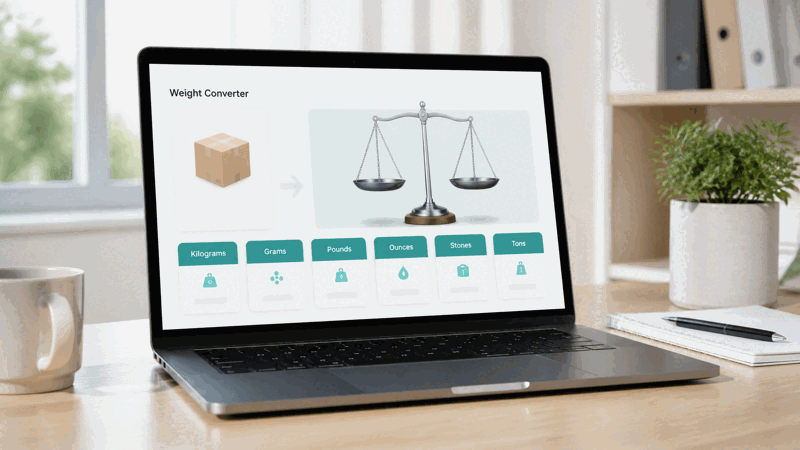
What the Weight Units Are and Where They Are Used
Weight, or more precisely mass in everyday use, is measured in two main systems around the world. The metric system uses grams and kilograms, while the imperial and US customary systems use ounces, pounds and stones. Most countries use metric, while a few use imperial for everyday weights, and both appear in various contexts. This makes converting weight between the systems, and between units within them, a frequent practical need.
Within the metric system, weight units relate simply by powers of ten, a thousand grams in a kilogram, which makes metric weight conversions straightforward. Within imperial, the factors are less regular, sixteen ounces in a pound, and pounds in a stone, which makes imperial conversions and, especially, conversions between the two systems more fiddly to do by hand, since the cross system factors are not round numbers.
Converting between metric and imperial weight is where a converter is especially valuable, because the conversion factors between the systems are not memorable round numbers. Turning pounds into kilograms, ounces into grams, or the reverse, involves specific factors that few people know precisely. A converter handles these exactly, giving accurate results without the need to look up or remember the conversion factors between the weight systems.
Weight conversion is useful in many everyday situations. Cooking often requires converting recipe weights between units or systems. Travellers deal with weights, such as luggage limits, in unfamiliar units. Shipping and postage involve weight in various units. Fitness, health and shopping all involve weights that may need converting. Because the cross system factors are fiddly, a converter gives quick, reliable results for any weight in any unit, helping in all these contexts.
Metric Versus Imperial Weight Units
| System | Example units | Relate by |
|---|---|---|
| Metric | Grams, kilograms | Powers of ten, simple |
| Imperial and US | Ounces, pounds, stones | Less regular factors |
| Between systems | Metric to imperial | Non round factors, fiddly |
| A converter | Handles all exactly | No need to memorise |
Who Uses a Weight Converter
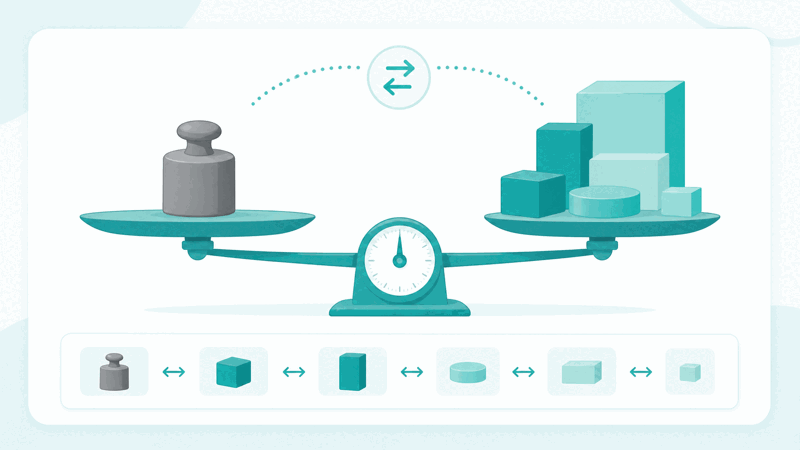
Pro Tips for Weight Conversions
Common Weight Conversion Mistakes to Avoid
Related Tools You May Need Next
For other measurement conversions, our Length Converter, Volume Converter and Temperature Converter help with the common everyday and scientific unit conversions.
Frequently Asked Questions
How do I convert between weight units?
Enter your weight value and select its unit, whether kilograms, pounds, ounces, grams or another, and the tool converts it into the other units, showing the equivalent values. This lets you express a weight in whatever unit you need and compare it across metric and imperial units. Since the conversion factors, especially between the two systems, are not memorable round numbers, the converter applies them exactly, giving accurate, instant results without you needing to look up or remember the factors between the weight units.
What are the main weight units?
Weight is measured in two main systems. The metric system uses units like grams and kilograms, related by powers of ten, and is used by most countries. The imperial and US customary systems use units like ounces, pounds and stones, with less regular factors between them, and are used by a few countries for everyday weights. Both systems appear in various contexts, from cooking to shipping. A weight converter handles units within each system and, importantly, conversions between the two systems, which involve factors that are harder to remember.
What is the difference between metric and imperial weight?
The metric system uses units like grams and kilograms, which relate by powers of ten, making conversions within it simple, such as a thousand grams in a kilogram. The imperial and US customary systems use units like ounces, pounds and stones, with less regular factors, such as sixteen ounces in a pound. Most countries use metric, while a few use imperial for everyday weights. Converting between the two systems involves specific factors that are not round numbers, which is where a weight converter is especially useful for accurate results.
Why are cross system weight conversions harder?
Because the conversion factors between metric and imperial weight units are not memorable round numbers. Within the metric system, units relate by simple powers of ten, and even within imperial the factors, though less regular, are somewhat familiar. But converting between the systems, such as pounds to kilograms or ounces to grams, involves specific factors that few people know precisely. This is why cross system conversions are fiddly to do by hand and why a converter, which applies the exact factors automatically, is especially valuable for converting weights between the metric and imperial systems.
How do I convert recipe weights?
When a recipe uses weight units unfamiliar to you, or from a different system, enter the recipe's weight and its unit into the converter to see the equivalent in the units you measure with, then use that amount. This is important because accurate quantities affect the result, especially in baking. Be mindful of which system the recipe uses. Converting accurately, rather than estimating, ensures you measure the right quantities and the recipe turns out as intended, which is particularly crucial for baking where the balance of ingredient weights matters to the outcome.
Should I convert weights to compare them?
Yes. To compare weights given in different units, you should convert them to the same unit first, since comparing across different units directly is confusing and error prone. For example, comparing a weight in pounds with one in kilograms without converting can mislead you about which is heavier. By converting both to the same unit, you can compare them clearly and see which is greater. Standardising the unit before comparing ensures the comparison is valid and the result meaningful, whether comparing product weights, luggage, or any weights given in different units.
Why is accurate weight conversion important for shipping?
Because shipping and postage often depend on weight, with costs and limits set by weight thresholds, and requirements may be given in a different unit than you use. An inaccurate weight conversion could lead you to misjudge which threshold a package falls into, affecting cost or eligibility. Converting the weight accurately to the required unit ensures you meet shipping requirements correctly and understand postage costs. Using a converter for precise results, especially between metric and imperial, helps you get shipping weights right, avoiding surprises or errors when sending items.
Is the weight converter free?
Yes, it is completely free with no account and no usage limit. You can convert as many weights between units as you like, as often as you like, at no cost. It runs entirely in your browser on any device, so there is nothing to download or install, and the equivalent weights in other units appear instantly whenever you enter a value and choose its unit, helping with cooking, travel, shipping, fitness and everyday weight conversions.